
Acupuncture and Moxibustion
Tung Acupuncture in Practice
Study Tung acupuncture in practice through zang-fu interconnections, holographic correspondences, and the system's approach of seeking efficient results with fewer needles.
About This Course
Course Introduction
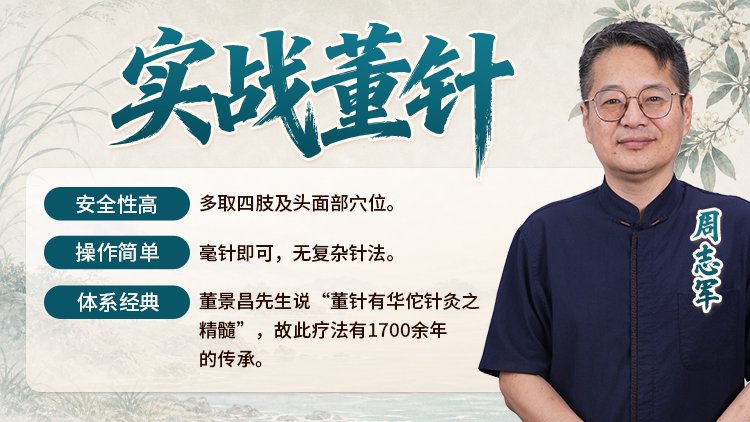
Tung Acupuncture in Practice is taught by Zhou Zhijun and centers on Tung's Extraordinary Points. It covers zang-fu interconnections, regional correspondences, holographic relationships, and seeking effective results with fewer needles. Topics include the overall qi-and-blood switch, Linggu and Dabai, Huashi extraordinary points, key migraine points, opening the fu systems and releasing stagnation, and opening kidney-related pathways and orifices. Rather than simply memorizing points, the course emphasizes a pathway of core concepts, organizing threads, and needling techniques, helping students know where to start organizing the Tung system.
Learn Step by Step
What You Will Learn
Organize Tung acupuncture's common point groups, typical cases, and practical approaches into reviewable study units. Establish an overall framework, then examine approaches to post-stroke concerns, varicose veins, stones, nodules, and pain.
Practitioners can use this course to supplement distinctive acupuncture services and strengthen communication and case-review skills.
Course Structure
Course Outline
Public preview: the following lessons are those publicly displayed on the original website.
- 01
[Tung Acupuncture in Practice] Lesson 01 - Origins of Tung's Extra-Point Acupuncture - Zhou Zhijun
- 02
[Tung Acupuncture in Practice] Lesson 02: Features of Tung's Extraordinary Points; Tung Color Assessment — Veins and Dark Shadows — Zhou Zhijun
- 03
[Tung Acupuncture in Practice] Lesson 03: Tung Color Assessment—Holographic Correspondences, Body Correspondences, and Zang-Fu Interconnections — Zhou Zhijun
- 04
[Tung Acupuncture in Practice] Lesson 04 - Tung's Specialist Bloodletting Method - Zhou Zhijun
- 05
[Tung Acupuncture in Practice] Lesson 05: Practical Tung Points — Region 11 (01) — Zhou Zhijun
- 06
[Tung Acupuncture in Practice] Lesson 06 - Tung's Extra Points in Practice: Region 11 (02) - Zhou Zhijun
- 07
[Tung Acupuncture in Practice] Lesson 07: Tung's Extraordinary Points in Practice—Region 11 (03) — Zhou Zhijun
- 08
[Tung Acupuncture in Practice] Lesson 08: Practical Tung Points — Region 11 (04) — Zhou Zhijun
- 09
[Tung Acupuncture in Practice] Lesson 09 - Tung's Extra Points in Practice: Region 11 (05) - Zhou Zhijun
- 10
[Tung Acupuncture in Practice] Lesson 10: Tung's Extraordinary Points in Practice—Region 22 (01) — Zhou Zhijun
Learning Experiences
Student Feedback
Tung acupuncture used to seem scattered to me. This course starts with the core ideas and connections, so I finally know how to organize my notes.
The Linggu, Dabai, and Huashi extraordinary-point topics are worth reviewing repeatedly, and the course includes many cases.
I have worked in physical therapies for years. The course gave me new ideas about point combinations and communicating with clients.