
Acupuncture and Moxibustion
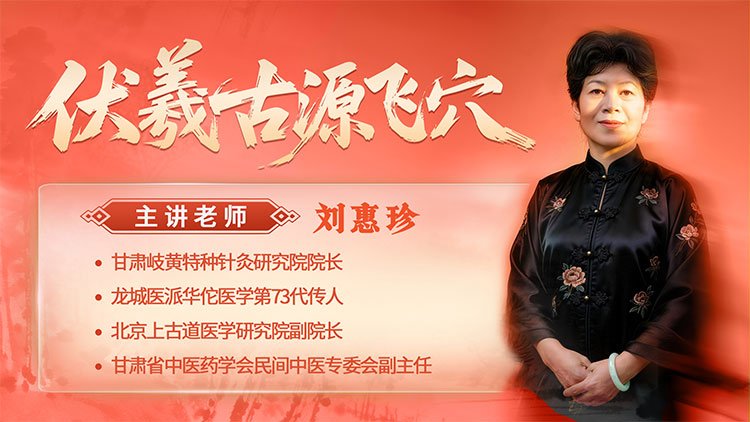
Fuxi Guyuan Feixue Acupoint Method
Explore Fuxi Guyuan Feixue through its affected-area, balance, and zang-fu point regions and its eighteen point prescriptions, and understand the associated theory and study units.
About This Course
Course Introduction
Fuxi Guyuan Feixue Acupoint Method, taught by Liu Huizhen, explores traditional theoretical connections among acupoint regions, cutaneous regions, meridians, and the zang-fu systems. Content is organized around three types of acupoint regions: affected-area regions, balancing regions, and zang-fu regions. Learners first gain an overall understanding of how this approach differs from locating individual points, then gradually study the specific modules.
Foundational materials include zang-fu Five-Phase formulas, six-movement formulas, and classical Seven-Star formulas, organized within an eighteen-needle-formula framework. They also introduce technique names such as first pressing, second rotating, third lifting, and fourth shaking. Advanced sections list ancient needling, lineage needling, Lingjiu needle formulas, and practice and theory topics. The first 10 entries appear below in their original order with original chapter and lesson numbers; other chapters are not currently displayed.
This course is for TCM students interested in point-region theory and distinctive techniques and helps practitioners assess whether its direction suits their background. Technique names and case descriptions are not instructions for independent practice or guarantees of safety, effectiveness, or professional eligibility. Practice must comply with local regulations and qualification requirements and include professional guidance. Confirm study levels and arrangements with the teaching assistant.
Learn Step by Step
What You Will Learn
Understand study by point regions, distinguishing affected-area, balance, and zang-fu point regions.
Understand traditional theoretical connections between cutaneous regions, meridians, and zang-fu organs, and compare the different focuses of point-zone study and locating individual points.
Clarify how zang-fu Five-Phase formulas, six-movement formulas, and classical Seven-Star formulas fit within the eighteen-needle-formula course framework.
Recognize course technique names such as pressing, rotating, lifting and shaking, and distinguish theoretical understanding, instructor demonstration and practice requiring professional guidance.
Follow the four Lingjiu needle-formula lectures listed in the original materials to understand theoretical coordination, technique sequence, point combinations, and integrated case study.
Distinguish foundational content from advanced modules such as ancient needling, lineage needling, and practice theory. Use your existing background to organize study questions for the instructor.
Course Structure
Course Outline
The first 10 syllabus entries are shown below, retaining the original chapter and lesson numbering. This is only part of the course.
- 01
Chapter 01: Theory (Part 1)
- 02
Chapter 02: Theory (Part 2)
- 03
Chapter 03: Introduction to the Eighteen Feixue Prescriptions
- 04
Chapter 03: Eighteen Feixue Prescriptions—Five-Phase Zang-Fu Regulation — Lesson 01: Liver and Gallbladder Needling
- 05
Chapter 03 — Eighteen Feixue Formulas: Five-Phase Formulas for Zang-Fu Conditions — Lesson 02: Heart Three Needles
- 06
Chapter 03: Eighteen Feixue Prescriptions—Five-Phase Zang-Fu Regulation — Lesson 03: Three-Needle Spleen and Stomach Technique
- 07
Chapter 03: Eighteen Feixue Prescriptions—Five-Phase Zang-Fu Regulation — Lesson 04: Three-Needle Lung Technique
- 08
Chapter 03 — Eighteen Feixue Formulas: Five-Phase Formulas for Zang-Fu Conditions — Lesson 05: Kidney Three Needles
- 09
Chapter 04: Eighteen Feixue Prescriptions—Six-Movement Pain Regulation — Lesson 01: Three-Needle Head Technique
- 10
Chapter 04: Eighteen Feixue Prescriptions—Six-Movement Pain Regulation — Lesson 02: Three-Needle Nose Technique