
Acupuncture and Moxibustion
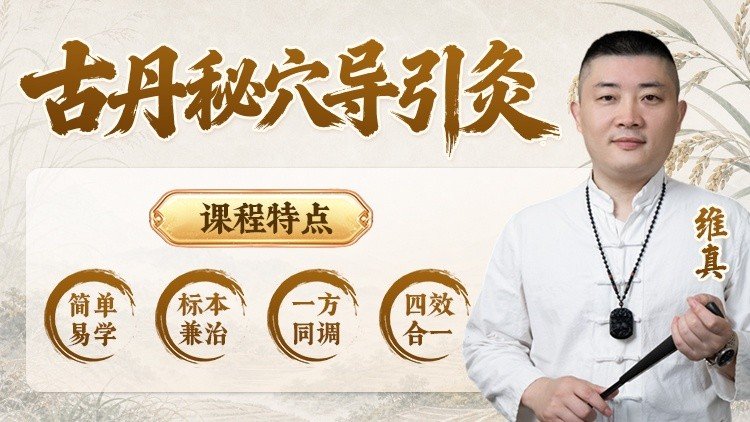
Gudan Acupoint-Guided Moxibustion
Explore a course approach combining bian-stone therapy, herbal medicine, moxibustion, and daoyin, along with its content categories and pattern-differentiation study themes.
About This Course
Course Introduction
Gudan Acupoint-Guided Moxibustion is taught by Weizhen. The available materials list four areas: bian-stone methods, herbs, moxibustion, and daoyin. TCM concepts of qi and blood, the zang-fu systems, and the Five Phases explain how the course organizes observation, pattern differentiation, and related techniques.
The practical course in the materials has eight categories: the 'four highs,' gynecology, nodule-dispersing topics, zang-fu systems, men's health, pain, externally contracted conditions, and body form. Further pattern-differentiation study is also listed. This describes the original course scope only, without promising outcomes for the corresponding conditions or body-form concerns. Confirm complete chapters, class formats, and current arrangements with a teaching assistant.
This page provides no herbal recipes, dosages, or individual assessment or treatment plans. Before moxibustion, external materials, or other procedures, consult a suitably qualified professional and follow procedural standards. Do not use this information to stop medicines, manage emergencies, or replace appropriate medical care.
Learn Step by Step
What You Will Learn
Understand the relationship between bian-stone techniques, herbs, moxibustion and daoyin in the course. Establish an overall framework before choosing topics for deeper study.
Understand how the original materials use traditional TCM concepts such as wind, cold, and dampness to describe the course, distinguishing course theory from assessment of personal health.
Organize the practical course's eight content areas, then ask about relevant topics and prerequisites according to your goals.
Explore further topics such as qi-and-blood and zang-fu pattern differentiation and Five-Phase constitution differentiation. Confirmed information determines teaching depth and course level.
Understand the neck, shoulder, lower-back, knee, and body-form topics in the introduction, recognizing that course scope does not guarantee individual outcomes.
Explore the formats listed in the materials, such as in-person teaching, internal handouts, and study discussions. When making an inquiry, confirm the intended audience, current arrangements, and boundaries of practical instruction.
Course Structure
Course Outline
Public preview: the following lessons are those publicly displayed on the original website.
- 01
Part 01 — Pain (Theory) — Lesson 01: Cervical Spondylosis — Weizhen
- 02
Part 01: Pain (Practice) — Lesson 01: Cervical Spondylosis — Weizhen
- 03
Part 01: Pain (Theory) — Lesson 02: Frozen Shoulder — Weizhen
- 04
Part 01 — Pain (Practice) — Lesson 02: Frozen Shoulder — Weizhen
- 05
Part 01: Pain (Theory) — Lesson 03: Knee Arthritis — Weizhen
- 06
Part 01: Pain (Practice) — Lesson 03: Knee Arthritis — Weizhen
- 07
Part 01 — Pain (Theory) — Lesson 04: Lumbar Spine Conditions — Weizhen
- 08
Part 01: Pain (Practice) — Lesson 04: Lumbar Spine Conditions — Weizhen
- 09
Part 02: Gynecology (Theory) — Lesson 01: Uterine-Cold Patterns and Menstrual Pain — Weizhen
- 10
Part 02 — Gynecology (Theory) — Lesson 02: Pelvic Fluid — Weizhen