
Acupuncture and Moxibustion
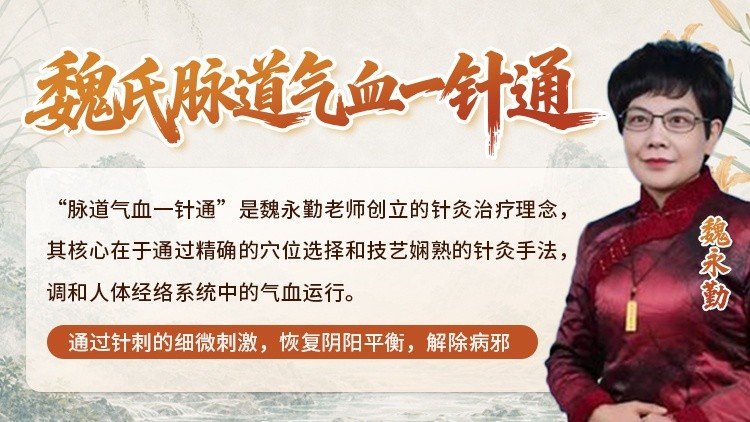
Wei Family Maidao Qixue Yizhentong Acupuncture
Explore Wei Family Maidao Qixue Yizhentong through cun–guan–chi pulse locations, qi-and-blood pulse patterns, and needling associated with Neiguan, and understand its theoretical framework and study sequence.
About This Course
Course Introduction
Taught by Wei Yongqin, Wei Family Maidao Qi-and-Blood One-Needle Method follows TCM meridian and pulse-assessment theories. It organizes cun-guan-chi positioning, pulse-taking direction, qi-and-blood pulse observation and related needling within one study framework, helping learners understand the connections the course draws between pulse characteristics and technique.
Available materials include foundational understanding, core teaching content, and in-person study arrangements. Priorities include zang-fu correspondences at cun, guan, and chi pulse positions, observation of different pulse sensations, needling concepts associated with Neiguan, and introductions to supporting topics such as pulse-channel manipulation and cupping. Confirm class formats, schedules, and suitability through further inquiry.
This page introduces the course and does not provide individual diagnosis or medicinal advice. Actual procedures such as needling require appropriately qualified professional guidance. Do not stop medication, manage emergencies, or replace formal healthcare based on this introduction.
Learn Step by Step
What You Will Learn
Organize the cun–guan–chi and zang-fu-location framework, identifying the locations and correspondences relevant to pulse study.
Explore the materials on pulse-palpation direction and standards, developing an approach to comparing pulse sensations and recording observations.
Explore the course's discussion of qi and blood origins and states, distinguishing concept study, pulse observation, and specific diagnostic and treatment judgments.
Explore Neiguan-related needling and the course concepts of supplementing, pushing, and regulating, recognizing that needling practice requires professional guidance and standardized training.
Use the body-region topics listed in the materials to understand how the course organizes pulse sensations, symptoms, contraindications and subsequent observation.
Explore supplementary topics such as pulse pushing and cupping, and the class format of questions and answers and mutual pulse palpation, so you can clarify your priorities when inquiring.
Course Structure
Course Outline
Public preview: the following lessons are those publicly displayed on the original website.
- 01
Lesson 00 — What Is Qixue Yizhentong Acupuncture? — Wei Yongqin
- 02
Lesson 01 — Methods of Pulse Assessment — Wei Yongqin
- 03
Lesson 02 — The Circulation of Qi and Blood — Wei Yongqin
- 04
Lesson 03 — Insomnia, Anxiety Disorders, Headache, Dizziness, Mental Fogginess and Cerebral Thrombosis — Wei Yongqin
- 05
Lesson 04 — Persistent Rhinitis in Children, Nosebleeds, Pneumonia and Shortness of Breath — Wei Yongqin
- 06
Lesson 05 — High Blood Lipids, Tachycardia and Liver Cirrhosis — Wei Yongqin
- 07
Lesson 06 — Dry and Sore Eyes, Amblyopia, Floaters and Blurred Vision — Wei Yongqin
- 08
Lesson 07 — Cataracts, Myopia, Hyperthyroidism, Liver Yang Rising, Cerebral Haemorrhage and Protruding Eyes — Wei Yongqin
- 09
Lesson 08 — Eye Gaze, Strabismus and Easy Fatigue — Wei Yongqin
- 10
Lesson 09 — Stomatitis, Oral Ulcers, Oral Cancer, Enteritis, Colitis and Small Intestinal Ulcers