
External Therapies
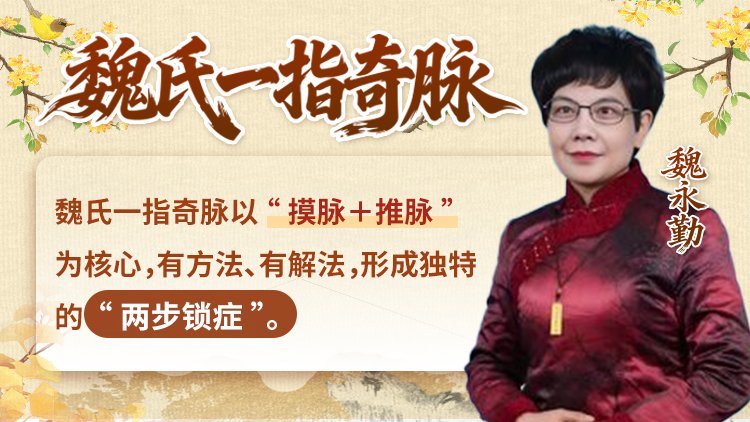
Wei Family One-Finger Qimai Method
Study a specialist approach that uses pulse presentation to help identify the direction of a problem, focusing on one-finger pulse examination, assessment of qi and blood, and the localization of common conditions.
About This Course
Course Introduction
Wei Family One-Finger Qimai covers specialist pulse assessment, qi-and-blood interpretation and localization of common disease-related concerns. It studies how specific pulse positions are used to perceive qi-and-blood quantity, strength, deficiency, excess and unusual responses. The course relates pulse sensations to topics such as nodules, masses, inflammation, reduced function and insufficient blood supply, for TCM learners and external-therapy practitioners seeking supplementary assessment knowledge.
Learn Step by Step
What You Will Learn
This course teaches the basic pulse positions, criteria for assessing qi and blood, and approaches to relating common concerns to the One-Finger Qimai Method.
Course Structure
Course Outline
Public preview: the following lessons are those publicly displayed on the original website.
- 01
[Wei Family One-Finger Qimai Method] Chapter 01: Theoretical Foundations — Lesson 01: Exploring Qi and Blood — Wei Yongqin
- 02
[Wei Family One-Finger Qimai Method] Chapter 01 — Theoretical Foundations — Lesson 02: Eight Standard Steps of Whole-Body Pulse-Channel Regulation — Wei Yongqin
- 03
[Wei Family One-Finger Qimai Method] Chapter 02 - Practical Applications - Lesson 01 - Anxiety (Special Pulse) - Wei Yongqin
- 04
[Wei Family One-Finger Qimai Method] Chapter 02: Practical Applications — Lesson 02: Lung Nodules (Special Pulse) — Wei Yongqin
- 05
[Wei Family One-Finger Qimai Method] Chapter 02 - Practical Applications - Lesson 03 - Chest Tightness and Shortness of Breath - Wei Yongqin
- 06
[Wei Family One-Finger Qimai Method] Chapter 02 — Practical Applications — Lesson 04: Hyperthyroidism and Protruding Eyes — Wei Yongqin
- 07
[Wei Family One-Finger Qimai Method] Chapter 02: Practical Applications — Lesson 05: Tachycardia — Wei Yongqin
- 08
[Wei Family One-Finger Qimai Method] Chapter 02 - Practical Applications - Lesson 06 - Severe Insomnia - Wei Yongqin
- 09
[Wei Family One-Finger Qimai Method] Chapter 02 — Practical Applications — Lesson 07: Hypertension with Qi-Blood Deficiency — Wei Yongqin
- 10
[Wei Family One-Finger Qimai Method] Chapter 02: Practical Applications — Lesson 08: Cerebral Infarction (Special Pulse) — Wei Yongqin
Learning Experiences
Student Feedback
One-finger pulse examination works well as an aid to assessment. The key is repeated practice to develop tactile sensitivity.
The course explains states of excessive, insufficient and deficient qi and blood quite clearly.
Suitable for people already offering health-regulation services, and helpful for discussing physical states with clients.