
Traditional Diagnostic Methods
Huangdi Hand Assessment
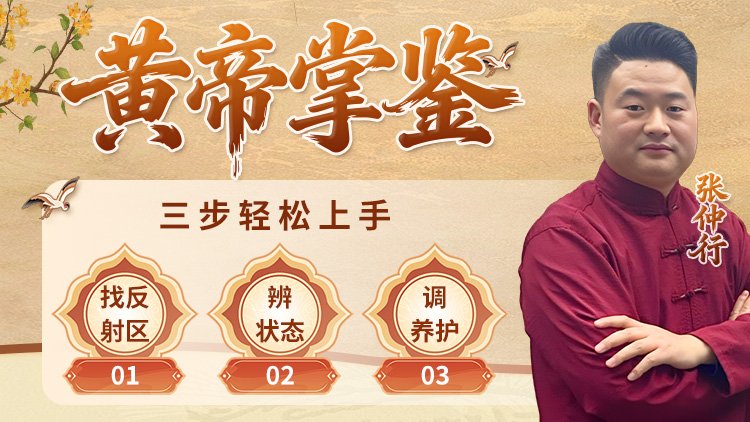
Study a systematic approach to hand observation and therapy through 85 hand reflex zones, tactile palpation, and visual assessment.
About This Course
Course Introduction
Huangdi Hand Assessment draws on Huangdi Neijing theories relating hand temperature to bodily condition, developed alongside hand-assessment and hand-therapy systems. With the principle that assessment guides treatment, it covers hand reflex zones, palpation, visual form, color, and markings to teach observation of bodily clues through the hands. It organizes traditionally less-defined hand-assessment material into locations and tactile findings that can be learned and reviewed. Sensations such as sand-like granules, lumps, bands, and nodules are considered alongside regions of the palms, backs of the hands, fingers, and thenar and hypothenar areas, gradually building a framework for hand observation and regulation.
Learn Step by Step
What You Will Learn
You will study Huangdi Hand Assessment's foundational theory and its correspondences with holographic biology and meridian theory. Learn hand reflex-region location principles, the left-for-men and right-for-women convention, and special-region observation rules. Four core tactile findings—grains, masses, cords, and nodules—are covered alongside visual assessment of shape, color, and lines.
The course also covers thumb-scraping techniques, pressing and kneading, regulation principles for hand reflex areas, and learning cases involving the heart, stomach, lungs, breasts, uterus and ovaries, spine and joints. For learners seeking a framework connecting hand assessment, hand-based therapies and complementary TCM techniques, it offers an entry point into diagnostic-method courses.
Course Structure
Course Outline
Public preview: the following lessons are those publicly displayed on the original website.
- 01
[Huangdi Hand Assessment] Chapter 01 — Trachea — Lesson 01: Pharyngitis — Zhang Zhongxing
- 02
[Huangdi Hand Assessment] Chapter 01: Trachea — Lesson 02: Tracheal Thickening — Zhang Zhongxing
- 03
[Huangdi Hand Assessment] Chapter 02 — Breast — Lesson 01: Breast Hyperplasia — Zhang Zhongxing
- 04
[Huangdi Hand Assessment] Chapter 02 - Breast - Lesson 02 - Breast Nodules - Zhang Zhongxing
- 05
[Huangdi Hand Assessment] Chapter 02: Breast — Lesson 03: Breast Fibroadenoma — Zhang Zhongxing
- 06
[Huangdi Hand Assessment] Chapter 02 — Breast — Lesson 04: Breast Malignancy-Related Signs — Zhang Zhongxing
- 07
[Huangdi Hand Assessment] Chapter 03 - Lungs - Lesson 01 - Lung Calcification Spots - Zhang Zhongxing
- 08
[Huangdi Hand Assessment] Chapter 03: Lungs — Lesson 02: Lung Nodules — Zhang Zhongxing
- 09
[Huangdi Hand Assessment] Chapter 03 — Lung — Lesson 03: Increased Lung Markings — Zhang Zhongxing
- 10
[Huangdi Hand Assessment] Chapter 03 - Lungs - Lesson 04 - Manifestations of Cancerous Change - Zhang Zhongxing
Learning Experiences
Student Feedback
I previously could not distinguish the hand reflex regions. The course explains their locations and tactile features in detail.
The tactile categories of grains, masses, cords, and nodules are practical and useful for repeated practice.
The hand-assessment content is extensive but clearly structured, making it suitable for practicing observation with family members while following the course.