
Traditional Diagnostic Methods
Qihuang Zhenyuan Traditional Assessment and Needling
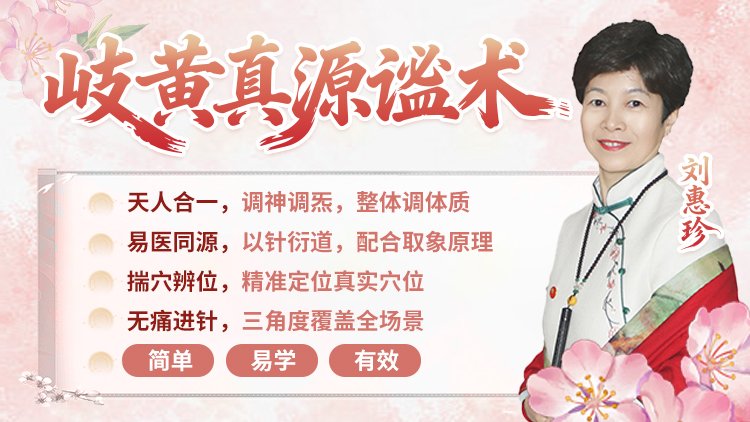
Study an integrated assessment-and-treatment approach from observation to point selection, combining Qihuang eye assessment, spirit and qi regulation, palpation-based point identification, and the Mi Three-Needle system.
About This Course
Course Introduction
Qihuang Zhenyuan Traditional Assessment and Needling is taught by Instructor Liu Huizhen. It integrates eye observation, the shared origins of Yi and medicine, regulation of spirit and qi, palpation-based point location, and several three-needle techniques. Its approach emphasizes harmony between humanity and nature and holistic constitution regulation. Eye observation, iris presentations, precise point location, and needling systems are used to explain connections between assessment, point selection, and regulation. Suitable for learners with foundations in TCM, acupuncture, or diagnosis, and practitioners broadening their eye-observation, needling, and integrated regulation frameworks, this comprehensive course combines observing signs, identifying states, locating points, and understanding needling rather than focusing on diagnosis alone.
Learn Step by Step
What You Will Learn
You will study Qihuang eye-observation principles, iris characteristics, three iris presentations, iris diagrams, and common observations. Qihuang Mi Three-Needle topics include Circulation of One Qi, Qixue Dahuan Dan, Bagua Three-Needle Knee, Lumbar, and Neck Methods, and three-needle methods for the kidneys, constraint release, throat, qi and blood, and nose, together with Happiness Needling.
The course also explains point identification through palpation, studying actual points in relation to bodily state and dynamic responses rather than only fixed textbook locations. It can provide a bridge for learners moving from assessment courses to practical needling study.
Course Structure
Course Outline
Public preview: the following lessons are those publicly displayed on the original website.
- 01
[Qihuang Zhenyuan Traditional Assessment and Needling] Lesson 01: Qihuang Eye Assessment — Liu Huizhen
- 02
[Qihuang Zhenyuan Traditional Assessment and Needling] Lesson 02: Features and Applications of Iris Assessment — Liu Huizhen
- 03
[Qihuang Zhenyuan Traditional Assessment and Needling] Lesson 03 - Illustrated Seven Rings of the Iris - Liu Huizhen
- 04
[Qihuang Zhenyuan Traditional Assessment and Needling] Lesson 04: Iris Features — Liu Huizhen
- 05
[Qihuang Zhenyuan Traditional Assessment and Needling] Lesson 05 - Thirteen Iris Presentations - Liu Huizhen
- 06
[Qihuang Zhenyuan Traditional Assessment and Needling] Lesson 05: Qihuang Mi Three-Needle Method—The Circulation of One Qi — Liu Huizhen
- 07
[Qihuang Zhenyuan Traditional Assessment and Needling] Lesson 06: Qihuang Mi Three Needles — Qixue Dahuandan — Liu Huizhen
- 08
[Qihuang Zhenyuan Traditional Assessment and Needling] Lesson 07: Qihuang Mi Three-Needle Method—Tihu Guanding Gourd Three-Needle Technique — Liu Huizhen
- 09
[Qihuang Zhenyuan Traditional Assessment and Needling] Lesson 08 - Qihuang Mi Three-Needle Techniques: Yang-Supporting Three-Needle Method - Liu Huizhen
- 10
[Qihuang Zhenyuan Traditional Assessment and Needling] Lesson 09: Qihuang Mi Three Needles — Heaven-and-Earth Three Needles — Liu Huizhen
Learning Experiences
Student Feedback
The course goes beyond eye assessment to discuss needling methods and point-selection reasoning. It suits people seeking deeper study.
The instructor's explanation of palpating and identifying acupoints really impressed me. I used to just memorize points, but now I am beginning to understand how to locate them dynamically.
The content is broad. Some background in acupuncture or assessment will help you take it in more quickly.