
Classical Herbal Formulas
Shanghan Lun in Practice
Study the Shang Han Lun through a practical pathway for contemporary common conditions, using six-meridian pattern differentiation, six major formulas, and clinical modifications.
About This Course
Course Introduction
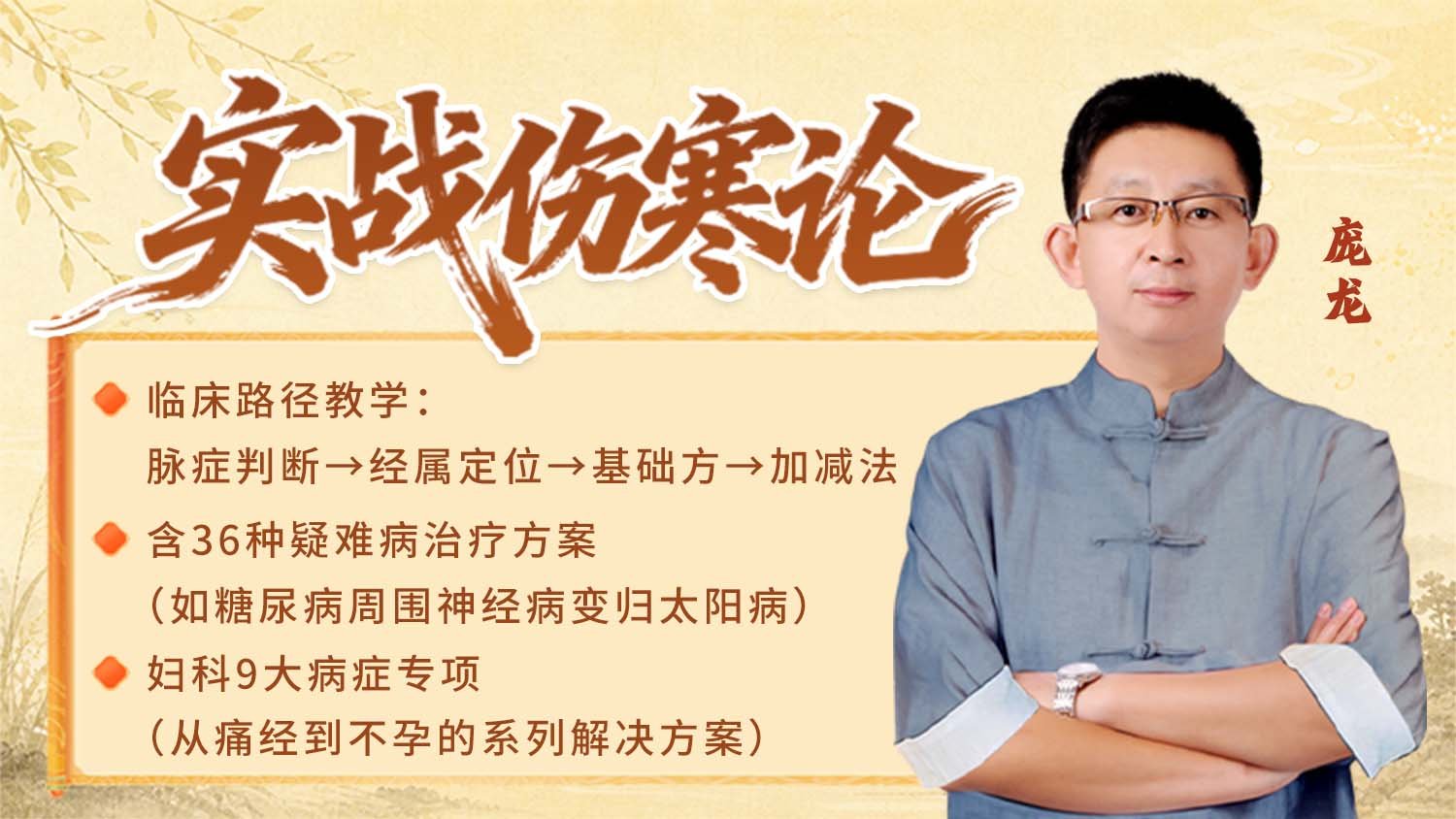
Shanghan Lun in Practice is taught by Pang Long. It condenses the extensive traditional text into a learning path involving six-meridian pattern differentiation, six classical formulas, and common modifications, using pulse appearances, symptoms, and disease location to explore pathomechanisms. It covers Taiyang, Shaoyang, Yangming, Taiyin, Shaoyin, and Jueyin, alongside skin, lung-system, gallbladder, thyroid, breast, intestinal, men's-health, gynecological, bone-and-joint, stomach, and oral topics. Its practical classical-formula approach emphasizes the traditional idea of small formulas addressing major conditions.
Learn Step by Step
What You Will Learn
Learn to develop Shanghan Lun clinical reasoning through pulse-and-presentation assessment, six-channel localization, basic formula selection, and formula modifications.
Course Structure
Course Outline
Public preview: the following lessons are those publicly displayed on the original website.
- 01
[Shanghan Lun in Practice] 01: Overview (Part 1)—What Is Six-Channel Pattern Differentiation? Entering the World of Shanghan Lun — Pang Long
- 02
[Shanghan Lun in Practice] 01: Overview (Part 2) — What Is Six-Meridian Pattern Differentiation? Entering the World of the Shanghan Lun — Pang Long
- 03
[Shanghan Lun in Practice] 02 (Clauses 1–3) - What Is Taiyang Disease? Distinguishing Zhongfeng and Shanghan Patterns - Pang Long
- 04
[Shanghan Lun in Practice] 03 (Clauses 4–8): Transmission and Non-Transmission of Taiyang Disease; Features of Wind-Warmth — Pang Long
- 05
[Shanghan Lun in Practice] 04 (Clauses 9–16) - Introducing Gui Zhi Tang, the Ancestor of Formulas: Wind-Related Colds, Headache, Nasal Congestion, Aversion to Cold, and Poor Appetite - Pang Long
- 06
[Shanghan Lun in Practice] 05 (Clauses 17–24): Guizhi Jia Gegen Tang; Wind Exposure, Cervical Spondylosis, Persistent Sweating, and Hand-Foot Spasms — Pang Long
- 07
[Shanghan Lun in Practice] 06 (Clauses 25–31): Guizhi Mahuang Geban Tang; Colds, Fever, Chills, Headache, Abdominal Bloating, and No Sweating — Pang Long
- 08
[Shanghan Lun in Practice] 07 (Clauses 32–34) - Cold Hands and Feet, Calf Cramps, and Constipation - Pang Long
- 09
[Shanghan Lun in Practice] 08 (Clauses 35–41): Colds, Fever, Generalized Pain, and Diarrhea; Mahuang Tang and Gegen Qinlian Tang — Pang Long
- 10
[Shanghan Lun in Practice] 09 (Clauses 42–46): Exterior Cold with Interior Heat or Interior Cold; Da Qinglong Tang and Xiao Qinglong Tang — Pang Long
Learning Experiences
Student Feedback
The many clauses of the Shanghan Lun used to feel overwhelming. After studying this course, I understood that I could first build a framework around the six meridians.
The instructor connects formulas with common contemporary problems, making it easy to organize the material into tables for review.
The section linking pulse-and-presentation assessment to formula selection helped me most. My reasoning is much clearer.