
Traditional Diagnostic Methods
Traditional Eye Observation
Study an approach to holographic eye observation and health management based on eye shape, color, spots, visible vessels, and their relative positions.
About This Course
Course Introduction
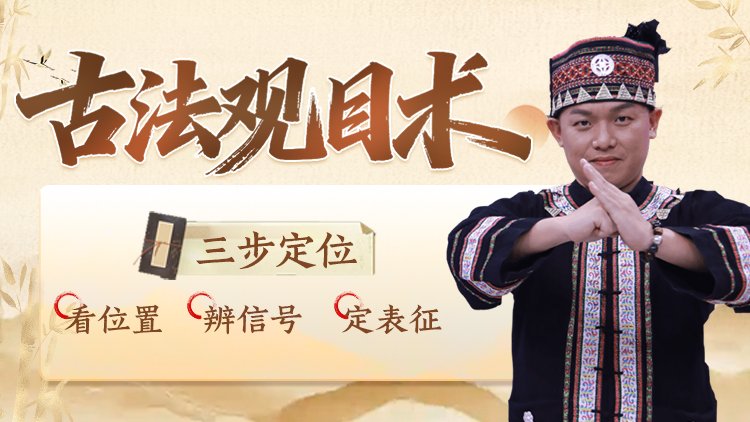
Traditional Eye Observation draws on Zhuang medicine's traditional health-observation methods. It teaches naked-eye observation of subtle changes in shape, color, spots, blood vessels, and markings in different eye regions, alongside holographic correspondences between the eye and body, to form a reference framework for observing bodily condition and health management. Its three-step approach is to locate, distinguish signals, and identify the presenting pattern. Observing where a sign appears, its type, color, and shape provides a starting point for discussing possible deficiency, excess, cold, heat, and body-system correspondences. The course emphasizes that complex instruments are unnecessary and is intended to supplement observational skills for health-management, wellness-consultation, and TCM learners.
Learn Step by Step
What You Will Learn
You will study basic eye-observation principles, holographic eye correspondences, common types of signs, observation of eight major systems, and cases involving the heart, male and female systems, thyroid, gallbladder, and spine. The course explains how eye signs are understood to reflect physical states, and how to communicate health-management suggestions more clearly with clients or family members.
The course teaches an accessible, convenient, and intuitive approach to eye observation, intended as a supplementary tool for studying TCM diagnosis, observing family health, and professional communication.
Course Structure
Course Outline
Public preview: the following lessons are those publicly displayed on the original website.
- 01
[Traditional Eye Observation] Chapter 01: Origins and Overview of Eye Assessment — Huang Xin
- 02
[Traditional Eye Observation] Chapter 02 - Five-Wheel Eye Assessment - Huang Xin
- 03
[Traditional Eye Observation] Chapter 03: Conditions in the Twelve Time-Zones of the Sclera (Part 1) — Huang Xin
- 04
[Traditional Eye Observation] Chapter 03: Conditions in the Twelve Scleral Time Zones (Part 2) — Huang Xin
- 05
[Traditional Eye Observation] Chapter 04 - Common Conditions - Lesson 01 - Coronary Heart Disease and Four Heart Presentations - Huang Xin
- 06
[Traditional Eye Observation] Chapter 04: Common Conditions — Lesson 02: Hypertension — Huang Xin
- 07
[Traditional Eye Observation] Chapter 04 — Common Conditions — Lesson 03: Hyperlipidemia — Huang Xin
- 08
[Traditional Eye Observation] Chapter 04 - Common Conditions - Lesson 04 - Hyperglycemia - Huang Xin
- 09
[Traditional Eye Observation] Chapter 04: Common Conditions — Lesson 05: Liver-Related Concerns — Huang Xin
- 10
[Traditional Eye Observation] Chapter 04 — Common Conditions — Lesson 06: Gallbladder-Related Concerns — Huang Xin
Learning Experiences
Student Feedback
I used to look at eyes casually. Now I know to consider location, sign type, and color, making observation much clearer.
The course fits health management well. I found it helpful for early reminders and communicating with clients.
Eye observation is visually accessible but requires practice with many images and gradual accumulation of cases.