
Acupuncture and Moxibustion
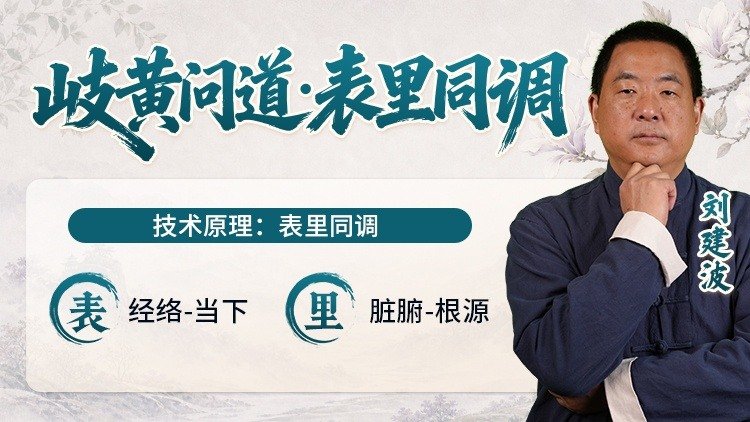
Qihuang Wendao: Coordinated Interior–Exterior Regulation
Begin with the interior-exterior relationships between meridians and the zang-fu systems. Explore point-selection approaches involving the twelve meridians, eight extraordinary vessels, and Five Phases to build a framework for studying coordinated interior-exterior regulation.
About This Course
Course Introduction
Qihuang Wendao: Coordinated Interior–Exterior Regulation is taught by Liu Jianbo and organized around relationships between the exterior and interior. Its materials consider meridians from the exterior perspective and zang-fu systems as the interior theoretical thread, connecting local presentations with holistic analysis and introducing the course's point-selection and combination approaches.
The materials list theoretical areas including the twelve meridians, eight extraordinary vessels, Five Phases, holographic correspondence, and Zhouyi Bagua, with examples involving legs, knees, neck, and shoulders. Study also covers pain, internal medicine, gynecology, men's health, neurological, skin, surgical, and sense-organ topics. Advanced areas include five shu points, Ziwu Liuzhu, and the five movements and six qi. This is a content overview; specific chapters and stage arrangements will continue to be added.
This course suits learners with a TCM foundation who want to organize specialist point-selection reasoning systematically. Traditional theories and cases are for study, do not replace clinical assessment, and do not guarantee therapeutic effects, recurrence outcomes, or learning results. Actual procedures require compliance with local laws and qualification requirements and professional guidance. Ask a teaching assistant to confirm study formats and arrangements.
Learn Step by Step
What You Will Learn
Understand the course's theoretical framework, which interprets the exterior through meridians and the interior through zang-fu functional systems, and connect local presentations with a holistic perspective.
Organize the twelve-meridian and eight-extraordinary-vessel point-selection threads in the materials as a foundational outline for later understanding course combinations.
Understand how the Five Phases, holographic correspondences, and Yijing bagua contribute to the course's traditional point-selection approach, and distinguish the study tasks associated with each perspective.
For the leg, knee, neck, shoulder, and other topics listed in the materials, practice recording the reasoning behind case analyses rather than only the results of techniques.
Organize the scope into pain, internal medicine, gynecology, men's health, neurological, skin, surgical, and sense-organ topics, and clarify questions requiring instructor confirmation.
Identify how the foundational framework relates to advanced topics such as the five movements and six qi, five shu points, and Ziwu Liuzhu, and plan study according to your existing knowledge.
Course Structure
Course Outline
Public preview: the following lessons are those publicly displayed on the original website.
- 01
Lesson 01 — Principles of the Course — Liu Jianbo
- 02
Lesson 02 — Gallbladder Cold, Deficiency and Heat Patterns — Liu Jianbo
- 03
Lesson 03 — Liver Cold Patterns — Liu Jianbo
- 04
Lesson 04 — Liver Deficiency Patterns — Liu Jianbo
- 05
Lesson 05 — Liver Heat Patterns — Liu Jianbo
- 06
Lesson 06 — Lung Cold, Deficiency and Heat Patterns — Liu Jianbo
- 07
Lesson 07 — Large Intestine Cold, Deficiency and Heat Patterns — Liu Jianbo
- 08
Lesson 08 — Stomach Cold and Deficiency Patterns — Liu Jianbo
- 09
Lesson 09 — Stomach Heat Patterns — Liu Jianbo
- 10
Lesson 10 — Spleen Cold, Deficiency and Heat Patterns — Liu Jianbo